The global economy is experiencing a highly-synchronised acceleration of growth. The expansion is broad based, covering all major economies and regions. Despite the absence of inflationary pressures, the strength of US data has helped affirm the Fed’s monetary tightening trajectory. In Europe, it enabled the ECB to moderate its quantitative easing measures.
The sense of optimism over the weeks is pervasive. At the October IMF and World Bank meetings, for example, it was noteworthy that many participants saw the global risks as balanced. China, a long-standing source of much hand-wringing, was barely mentioned. One of the large fund managers, in which we are invested, sent out a note describing the outlook “as good as it gets.”
The risk of all this optimism is that it breeds complacency. Valuations are pricing in fair weather. In the US, current multiples are justified by earnings growth expectations, but can look expensive if earnings disappoint.
The case for equities, however, is as much one about earnings growth as it is a case of relative valuations. A perfect cocktail of factors: ultra-low policy rates, steady growth, the absence of inflationary pressures, and quantitative easing in Europe and Japan together imply that fixed income assets in all major markets are likely to remain overvalued for the foreseeable future.
As valuations rise, we must adjust our expectations for future returns. At current levels, we find it difficult to justify annual return expectations above 6% for US equities over the next three years. Consequently, we seek to increase alternatives outside the markets which form the core of our portfolios.
From our perspective, Japan is a perennial peripheral, and it is here that we think there are multiple reasons to believe that equities will perform well in the period ahead.
First, attractive valuations. Japanese equities have always been a bit tricky to value. Years of deflation imply that earnings can grow in real terms, even if they remain constant in nominal terms. This maybe a bearable state of affairs for domestic investors, but it isn’t a consolation to foreign investors who will see zero return. While recognising the risks of extrapolating earnings growth in Japan, equities are fairly valued compared to their history, but are attractively valued compared to the rest of the world. Additionally, in a country of ultra-low or negative yields for most bonds, Japanese equites are paying a dividend yield that is almost triple the average corporate bond yield.
Second, there are good signs of inflation. Deflationary expectations have been exceptionally well entrenched for the better part of two decades. Recently, however, price increases started being noticeable in frequently purchased goods, such as groceries. The price of Nikkei newspaper was increased. The size of chocolate bars is getting smaller (a disguised form of inflation). Price rises in high frequency purchases have a bigger impact on inflationary expectations than other goods.
Third, politics and policies are supportive. Prime Minister Abe was re-elected with a much larger than anticipated majority. This ensures policy continuity, including substantial monetary easing to support a meaningful rise in inflationary expectations. Equally important is his strengthened position to reinvigorate structural reforms.
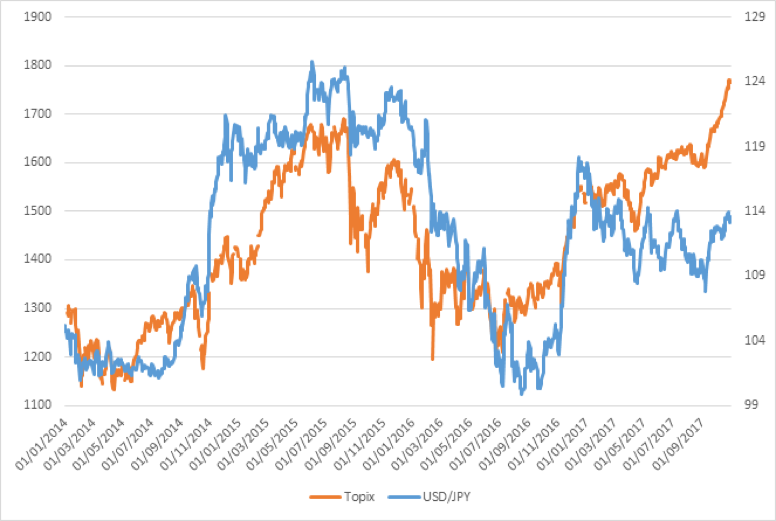
Fourth, currency weakness may support earnings growth. Over the past few years, the correlation between the Japanese yen exchange rate and market performance was high. The causal relationship was simply that yen weakness presaged higher earnings for Japanese exporters, and the reverse. This correlation broke down this year, in a way that should provide some comfort to investors. Earnings growth was meaningful despite the absence of any tailwinds from the currency. A weakening of the yen (as the Fed tightens policy) can provide a further boost to earnings.
Against this background, we increased our allocation to Japanese equities in our portfolios. This puts Japanese and European equities as the only major markets in which we are overweight.